The clothing traditions of Buddhist-majority countries reflect a rich interplay between spiritual values, cultural identity, and practical adaptation to climate. Across Southeast Asia and the Himalayas, garments are not merely functional but serve as visual expressions of religious devotion, social status, and regional heritage. The flowing saffron robes of monks might be the most universally recognized Buddhist attire, yet laypeople's clothing reveals equally fascinating stories woven through centuries of tradition.
In Thailand, the phaa nung and sabai demonstrate how Buddhist modesty guidelines manifest in elegant textiles. Women's wrap-around skirts often feature intricate patterns inspired by temple motifs, while the sabai shawl drapes diagonally across the torso in a manner reminiscent of monastic robes. These garments evolved from ancient court dress yet maintain relevance in modern society through subtle adaptations - synthetic fibers replacing silk for everyday wear, traditional cuts modified for office environments, all while preserving the modest coverage that aligns with Buddhist principles.
Burmese longyi present another fascinating case where spirituality and practicality merge. The cylindrical cloth worn by both genders exemplifies the Buddhist middle way - neither restrictive like Western trousers nor excessively loose like some monastic garments. During temple visits, wearers adjust their longyi to ensure shoulders and knees remain covered, demonstrating conscious awareness of sacred spaces. The distinctive checked patterns of men's longyis often incorporate auspicious colors mentioned in Buddhist scriptures, while women's versions feature floral designs symbolizing impermanence.
Bhutanese gho and kira showcase how Buddhist values become material culture. The knee-length gho worn by men requires precise folding at the waist to create a pouch-like space, said to represent carrying one's karma. Women's kira ensembles involve multiple layers of handwoven fabric, their weight and complexity reflecting the wearer's ability to bear life's burdens with equanimity. These garments incorporate natural dyes and weaving techniques preserved by monastic communities, making clothing production itself a meditative practice.
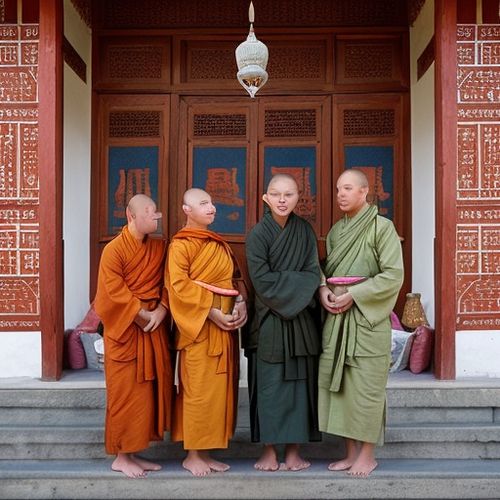
Monastic robes across traditions tell perhaps the most profound sartorial story. The Theravada kasaya originates from patched rice fields, its rectangular pieces symbolizing the fragmentation of desire. Tibetan monks wear maroon and gold robes during tantric rituals, the vibrant colors representing transformative wisdom. Zen practitioners in Japan don koromo with exceptionally wide sleeves designed to catch falling food during alms rounds - a constant reminder against waste. Each stitch and fold carries philosophical meaning, from the rags-to-robe tradition emphasizing non-attachment to the ritualized sewing practices that turn garment-making into mindfulness training.
Contemporary fashion in Buddhist societies increasingly negotiates between tradition and modernity. Young designers in Cambodia reinvent sampot with eco-friendly fabrics, while maintaining the modest draping that respects temple dress codes. Nepalese streetwear blends haku patasi patterns with denim, creating hybrid styles acceptable for both monastery visits and urban cafes. This evolution demonstrates Buddhism's adaptive nature - preserving core values while embracing necessary change, much like the religion's own spread across diverse cultures throughout history.
The materiality of Buddhist clothing reveals deeper spiritual truths. From the intentionally coarse fabric of meditation robes that prevent sensual indulgence to the luminous silks reserved for ceremonial occasions, textiles become teachers. Laotian weavers incorporate tiny imperfections into phaa biang shawls as reminders of life's inherent flaws, while Tibetan prayer flags gradually fade to demonstrate impermanence. In these traditions, clothing transcends fashion to become a daily practice of mindfulness, where every garment worn becomes an opportunity to contemplate Buddhist teachings.
Seasonal variations further illustrate Buddhism's harmonious relationship with nature. During monsoon retreats, Thai monks receive special waterproof outer robes, while Bhutanese switch to lighter kira fabrics when summer heat arrives. These adaptations show practical wisdom without compromising modesty - the middle path applied to wardrobe choices. Even funeral customs involve specific cloth types: white mourning garments in Sri Lanka reflect the purity of transitory states, while Burmese wrap corpses in monastic robes regardless of the deceased's vocation, emphasizing ultimate equality before karma.
Modern challenges like fast fashion and climate change are prompting Buddhist communities to revisit traditional clothing wisdom. Burmese monasteries now teach natural dyeing to preserve both craft and environment, while Thai designers reinterpret temple mural patterns using sustainable digital printing. These efforts align with Buddhist teachings on right livelihood and ecological responsibility, proving ancient sartorial traditions remain relevant guides for contemporary ethical living. The humble act of choosing, wearing, and caring for clothing thus becomes another thread in Buddhism's rich tapestry of mindful practices.
By Thomas Roberts/Apr 14, 2025
By Laura Wilson/Apr 14, 2025
By Jessica Lee/Apr 14, 2025

By Benjamin Evans/Apr 14, 2025

By George Bailey/Apr 14, 2025

By Emma Thompson/Apr 14, 2025

By John Smith/Apr 14, 2025

By Michael Brown/Apr 14, 2025
By Megan Clark/Apr 14, 2025

By Jessica Lee/Apr 14, 2025

By Sarah Davis/Apr 14, 2025
By Laura Wilson/Apr 14, 2025
By Sophia Lewis/Apr 14, 2025

By Natalie Campbell/Apr 14, 2025
By Eric Ward/Apr 14, 2025

By Laura Wilson/Apr 14, 2025

By Sophia Lewis/Apr 14, 2025

By George Bailey/Apr 14, 2025

By Laura Wilson/Apr 14, 2025

By Daniel Scott/Apr 14, 2025