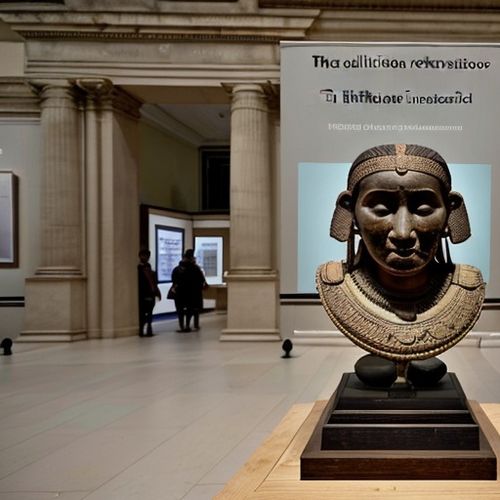
The British Museum finds itself at the epicenter of a renewed global debate as it quietly implements revised assessment criteria for handling restitution claims of colonial-era artifacts. This development comes amid growing pressure from former colonies and indigenous groups demanding the return of cultural treasures acquired under disputed circumstances during Britain’s imperial expansion.
Behind the museum’s neoclassical façade, curators and trustees have been engaged in what insiders describe as "a fundamental reevaluation of ethical stewardship." The new framework reportedly considers not just legal ownership but also the cultural and spiritual significance of objects to their places of origin. A senior curator, speaking on condition of anonymity, revealed that the guidelines now explicitly acknowledge "the moral weight of historical wrongs" in acquisition histories.
This shift follows several high-profile controversies surrounding the museum’s most contested holdings. The Elgin Marbles, Benin Bronzes, and Hoa Hakananai’a (the Easter Island statue) have become lightning rods for restitution campaigns. While the museum maintains its longstanding position that these artifacts were legally obtained, critics argue the very concept of legality under colonial occupation remains inherently problematic.
Changing tides in cultural diplomacy
Museum director Hartwig Fischer recently hinted at a more collaborative approach during a symposium at Oxford. "The era of absolute possession has given way to complex conversations about shared heritage," he remarked. This subtle but significant rhetorical shift suggests the institution may be moving toward long-term loan agreements and joint custodianship models as potential middle grounds.
Several European counterparts have already taken more decisive action. France’s Musée du Quai Branly has returned dozens of Benin artifacts to Nigeria, while Germany has committed to large-scale restitutions. The British Museum’s more cautious approach reflects both its status as a universal survey museum and the complex legal constraints of its founding 1753 charter, which prohibits deaccessioning items except under very specific circumstances.
Scientific community divided
Anthropologists and art historians remain split on the implications. Professor Nalini Rao from Jindal School of Liberal Arts argues that "context is everything – many objects lose their meaning when divorced from their cultural ecosystems." Conversely, Oxford’s Regius Professor of History maintains that "encyclopedic museums serve as vital safeguards against nationalist revisionism and provide unique opportunities for comparative study."
The museum’s new assessment criteria reportedly include: provenance research standards, consultation protocols with source communities, and consideration of current conservation capabilities in countries of origin. Notably absent is any mechanism for permanent repatriation, leading some critics to dismiss the changes as "cosmetic adjustments to deflect criticism."
Digital solutions and new paradigms
One innovative approach gaining traction involves advanced digital replication technologies. The museum has quietly partnered with tech firms to create ultra-high-resolution 3D scans of key artifacts. While digital surrogates can never replace original items, they may facilitate knowledge sharing and virtual access – particularly for communities separated from their cultural heritage by geography or immigration diasporas.
This technological dimension introduces fresh ethical questions. Who controls the digital rights to cultural artifacts? Can virtual restitution satisfy moral claims? The museum’s digital initiatives coordinator notes that "we’re navigating uncharted territory where technology outpaces both policy and philosophy."
As the debate continues, the British Museum’s evolving position reflects broader societal shifts in how former colonial powers reckon with historical injustices. The coming years will test whether the world’s oldest national public museum can adapt to 21st-century ethical standards while maintaining its universalist mission. What emerges may redefine not just museum practices, but the very meaning of cultural ownership in our interconnected age.

By Sophia Lewis/Apr 12, 2025
By Victoria Gonzalez/Apr 12, 2025

By Olivia Reed/Apr 12, 2025

By Sophia Lewis/Apr 12, 2025

By Megan Clark/Apr 12, 2025

By Emily Johnson/Apr 12, 2025
By Benjamin Evans/Apr 12, 2025

By Rebecca Stewart/Apr 12, 2025
By Grace Cox/Apr 12, 2025

By Grace Cox/Apr 12, 2025
By Sarah Davis/Apr 12, 2025
By Emma Thompson/Apr 12, 2025

By Michael Brown/Apr 12, 2025

By Lily Simpson/Apr 12, 2025

By John Smith/Apr 12, 2025
By Lily Simpson/Apr 12, 2025
By Rebecca Stewart/Apr 12, 2025

By Emily Johnson/Apr 12, 2025
By Natalie Campbell/Apr 12, 2025
By Jessica Lee/Apr 12, 2025