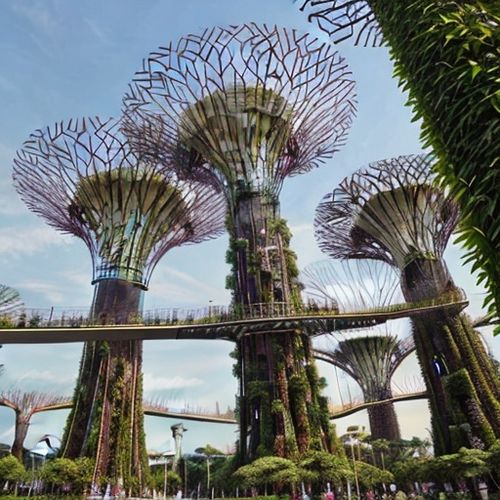
The iconic Supertree Grove at Singapore's Gardens by the Bay has long been a marvel of sustainable design and urban greening. Recently, these towering vertical gardens have taken on a new role as functional solar energy harvesters through an innovative photovoltaic art installation. The integration of solar technology into these already remarkable structures represents a bold step forward in Singapore's commitment to renewable energy and sustainable urban development.
Standing between 25 to 50 meters tall, the 18 Supertrees were originally designed as vertical gardens that mimic the ecological functions of real trees. Their steel frameworks support over 162,900 plants comprising more than 200 species. The newly installed photovoltaic cells blend seamlessly with the existing structure, covering portions of the canopy to capture Singapore's abundant sunlight while maintaining the trees' distinctive aesthetic appeal.
The solar panel integration represents a thoughtful marriage of form and function. Specially designed photovoltaic modules were custom-fabricated to match the organic shapes of the Supertrees' canopies. These panels utilize high-efficiency monocrystalline silicon cells that can generate electricity even under Singapore's frequent cloudy conditions. The installation maintains the trees' nighttime illumination capabilities while adding this crucial energy-generating dimension.
Early performance data from the photovoltaic Supertrees has exceeded expectations. During peak sunlight hours, the entire installation can generate up to 1.2 megawatt-hours of electricity daily - enough to power approximately 300 average Singaporean households. Over the course of a year, this translates to nearly 440 megawatt-hours of clean energy production, significantly offsetting the Gardens' operational power requirements.
What makes this project particularly noteworthy is its dual impact. Beyond the tangible energy production, the solar Supertrees serve as a highly visible symbol of Singapore's green ambitions. The installation demonstrates how renewable energy technologies can be beautifully integrated into urban landscapes without compromising aesthetic values. Visitors to the Gardens can witness firsthand how sustainable design principles are being implemented at scale.
The photovoltaic system's performance varies throughout the day and across seasons, following Singapore's distinctive solar patterns. Morning and late afternoon generation is somewhat reduced due to the angle of sunlight, but the vertical orientation of many panels helps capture low-angle light more effectively than traditional rooftop installations. During the monsoon season, energy production dips by approximately 15-20%, but still maintains significant output.
Maintenance of the solar-integrated Supertrees presents unique challenges that the Gardens' team has addressed through innovative solutions. A specialized cleaning system using purified water and extendable brushes keeps the panels free of dust and tropical grime without harming the surrounding vegetation. The system's monitoring technology provides real-time performance data, allowing for immediate identification and resolution of any issues.
The environmental impact extends beyond clean energy generation. By offsetting conventional power usage, the solar Supertrees help reduce carbon dioxide emissions by an estimated 200 metric tons annually. This complements the trees' existing environmental benefits, which include heat island mitigation, rainwater collection, and serving as vertical habitats for numerous plant species.
Looking ahead, the success of this project has sparked discussions about expanding photovoltaic integration to other structures within Gardens by the Bay and potentially across Singapore's urban landscape. The lessons learned from this installation - regarding technical implementation, maintenance protocols, and public engagement - are proving valuable for future sustainable urban design projects.
The solar Supertrees stand as a testament to Singapore's ability to combine cutting-edge technology with ecological design. They represent more than just an energy generation system; they are living examples of how cities can creatively address environmental challenges while enhancing their urban character. As Singapore continues its journey toward sustainable development, projects like this will likely serve as models for cities worldwide seeking to harmonize technological progress with environmental stewardship.
By Sophia Lewis/Apr 12, 2025

By Victoria Gonzalez/Apr 12, 2025

By Olivia Reed/Apr 12, 2025

By Sophia Lewis/Apr 12, 2025

By Megan Clark/Apr 12, 2025

By Emily Johnson/Apr 12, 2025

By Benjamin Evans/Apr 12, 2025

By Rebecca Stewart/Apr 12, 2025

By Grace Cox/Apr 12, 2025

By Grace Cox/Apr 12, 2025
By Sarah Davis/Apr 12, 2025

By Emma Thompson/Apr 12, 2025

By Michael Brown/Apr 12, 2025

By Lily Simpson/Apr 12, 2025

By John Smith/Apr 12, 2025

By Lily Simpson/Apr 12, 2025

By Rebecca Stewart/Apr 12, 2025
By Emily Johnson/Apr 12, 2025

By Natalie Campbell/Apr 12, 2025
By Jessica Lee/Apr 12, 2025