The intersection of ecological crisis and contemporary art has birthed a provocative new genre: eco-art. As wildfires rage, glaciers melt, and species vanish at unprecedented rates, artists are responding with works that oscillate between poetic meditation and urgent protest. This emerging movement raises fundamental questions about art's role in an age of environmental collapse—should it seduce through beauty or shock with hard truths?
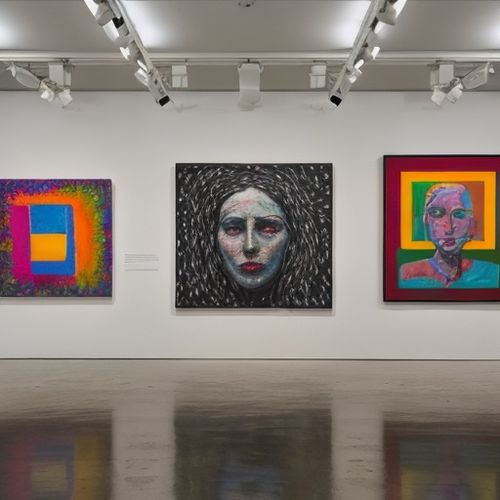
Walking through the Tate Modern's recent "Art in the Anthropocene" exhibition, visitors encountered startling contrasts. Olafur Eliasson's shimmering ice installations stood alongside Agnes Denes' stark photographs of deforested landscapes. The former captivated with its ethereal beauty as blocks of Greenlandic ice slowly melted in the gallery space; the latter assaulted viewers with brutal documentary evidence of ecological destruction. This tension between aesthetic pleasure and ecological messaging defines much of contemporary environmental art.
Critics argue that much eco-art suffers from a fundamental paradox. The very materials and processes used to create environmental art—international shipping of artworks, energy-intensive gallery spaces, toxic pigments—often contradict the ecological values they purport to champion. When Eliasson air-freighted twenty-four tons of Arctic ice to London, the carbon footprint undermined the work's environmental message. Yet defenders counter that such contradictions mirror our collective hypocrisy as consumers in a warming world.
The history of art has always reflected humanity's changing relationship with nature. From Romantic landscape painting to Land Art's monumental earthworks, artists have mediated our experience of the natural world. What distinguishes today's eco-art is its explicit activist dimension. Unlike Monet's water lilies or Smithson's Spiral Jetty, contemporary ecological art demands not just contemplation but action. This shift from representation to intervention marks a radical departure from traditional nature-based art.
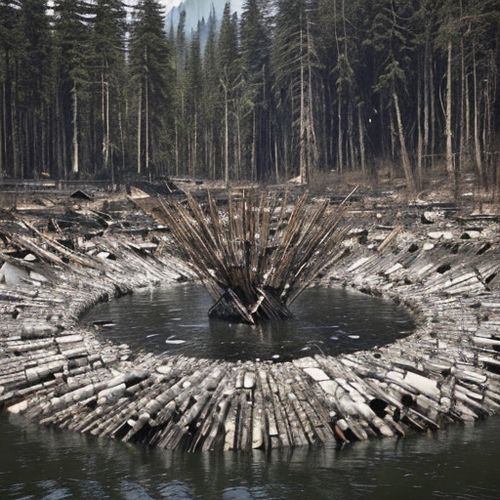
Some of the most powerful works operate through subtle suggestion rather than overt messaging. Maya Lin's "Ghost Forest"—a stand of dead Atlantic white cedars transported to Manhattan—created an eerie, meditative space that spoke volumes about climate change without a single didactic panel. The stumps, killed by saltwater intrusion from rising seas, became silent witnesses to ecological collapse. Visitors reported the installation provoked deeper reflection than more explicitly political works.
Yet other artists embrace direct confrontation. The collective Extinction Rebellion regularly stages dramatic performances featuring dying animals or rising floodwaters in financial districts and government buildings. Their work owes more to protest than traditional art practice, prioritizing message over medium. This approach has drawn criticism from art traditionalists but praise from climate activists who argue the crisis demands unambiguous communication.
The debate extends to institutional practices. Major museums face growing pressure to divest from fossil fuel sponsors while reducing their own environmental impact. The recent controversy at London's Science Museum over its Shell sponsorship of a climate exhibition revealed the tensions between funding realities and ethical imperatives. Some artists now refuse to work with institutions that maintain ties to polluting industries, while others argue engagement creates more change than boycott.
Emerging technologies are creating new possibilities for eco-art. Bioartists genetically modify organisms to highlight biodiversity loss. Virtual reality installations simulate climate futures without physical materials. Solar-powered kinetic sculptures demonstrate renewable energy's potential. These innovations attempt to resolve eco-art's material contradictions while pushing artistic boundaries. Yet they risk replacing tangible, visceral experiences with technological spectacle.
Perhaps the most profound question eco-art raises is whether beauty itself must be redefined for the Anthropocene. Traditional aesthetics often equate beauty with harmony, balance, and permanence—qualities increasingly alien in our era of disruption and instability. Some artists propose new aesthetic categories like the "sublime of decay" or "beauty of adaptation" to capture our transformed relationship with nature. This represents not just an artistic evolution but a philosophical reckoning with our place in a damaged world.
As the climate crisis intensifies, the stakes for eco-art grow higher. Galleries report increasing demand for works addressing environmental themes, while collectors show growing interest in artists with strong ecological commitments. Yet the art market's commercial nature creates new tensions between activism and commodification. Can a movement critiquing consumer culture thrive within that very culture's institutions?
The most compelling eco-art may be that which transcends the beauty-versus-message dichotomy. Christine Sun Kim's sonic installations translating glacier melt data into haunting soundscapes, or Mel Chin's "Revival Field" using hyperaccumulator plants to detoxify soil—these works combine rigorous conceptual underpinnings with powerful sensory experiences. They suggest a third path for ecological art: one that enlightens through embodiment rather than preaches through representation.
Ultimately, eco-art's significance may lie less in individual works than in its collective reimagining of art's purpose. As scientists issue increasingly dire warnings and governments drag their feet, artists are creating spaces for emotional processing and radical imagination. Whether through subtle suggestion or bold declaration, they're challenging us to see—and feel—our planetary crisis in new ways. In this light, the debate between aesthetics and activism may be a false dichotomy: in the Anthropocene, beauty must become meaningful, and meaning must find beautiful expression.
By Sophia Lewis/Apr 12, 2025
By Victoria Gonzalez/Apr 12, 2025

By Olivia Reed/Apr 12, 2025
By Sophia Lewis/Apr 12, 2025

By Megan Clark/Apr 12, 2025
By Emily Johnson/Apr 12, 2025
By Benjamin Evans/Apr 12, 2025
By Rebecca Stewart/Apr 12, 2025

By Grace Cox/Apr 12, 2025
By Grace Cox/Apr 12, 2025
By Sarah Davis/Apr 12, 2025
By Emma Thompson/Apr 12, 2025

By Michael Brown/Apr 12, 2025
By Lily Simpson/Apr 12, 2025

By John Smith/Apr 12, 2025

By Lily Simpson/Apr 12, 2025
By Rebecca Stewart/Apr 12, 2025
By Emily Johnson/Apr 12, 2025
By Natalie Campbell/Apr 12, 2025
By Jessica Lee/Apr 12, 2025