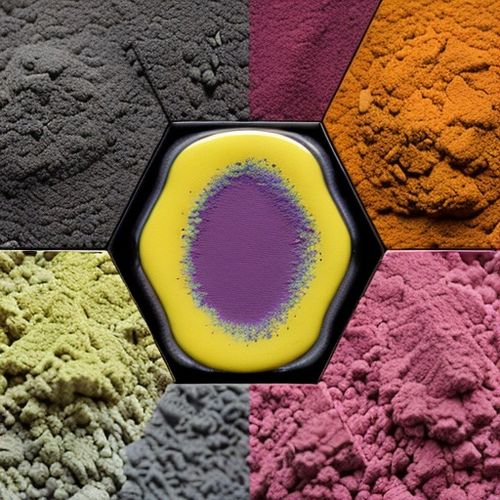
The world of color technology has taken a revolutionary leap forward with the introduction of graphene-based pigments. Scientists and material engineers have unveiled a new generation of colorants that promise to redefine vibrancy in industrial and artistic applications. Unlike traditional pigments, these graphene-infused formulations deliver an unprecedented 200% increase in color saturation, marking what experts are calling the most significant advancement in chromatic intensity since the invention of synthetic dyes.
At the heart of this breakthrough lies graphene's unique molecular structure. The two-dimensional honeycomb lattice of carbon atoms interacts with light in extraordinary ways, absorbing and reflecting specific wavelengths with near-perfect efficiency. This quantum-level precision enables colors to maintain their purity even when mixed or diluted, solving a centuries-old problem of color degradation in pigment blends. Early adopters in the automotive industry report that graphene-enhanced paints require fewer coating layers to achieve deeper hues while maintaining exceptional durability against UV radiation and environmental wear.
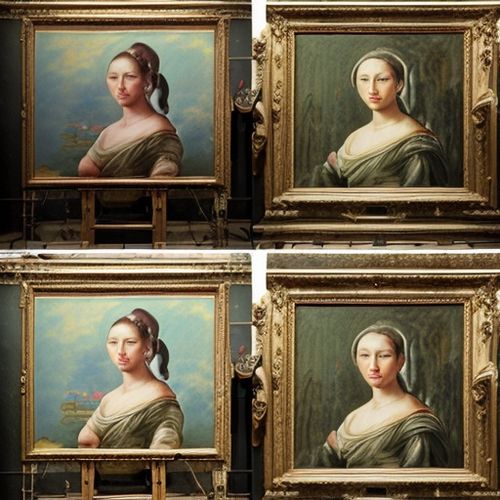
Art conservationists have discovered surprising applications for the technology. When used in restoration projects, graphene pigments can match historical colors with archaeological accuracy while providing modern lightfastness. The Vatican Museums recently employed a graphene-based ultramarine in their Sistine Chapel restoration, achieving a blue tone that chemically mirrors the original lapis lazuli used by Renaissance artists but with three times the chromatic intensity. This marriage of historical authenticity and contemporary performance is reshaping approaches to cultural heritage preservation worldwide.
Manufacturing processes for graphene pigments differ fundamentally from conventional colorant production. Rather than relying on metal oxides or organic compounds, the new method involves plasma-assisted graphene synthesis where controlled electromagnetic fields align carbon structures to precise optical specifications. This bottom-up approach allows engineers to "program" color characteristics at the atomic level, enabling customization options previously unimaginable. A single batch can be tuned to exhibit different saturation levels for varied applications while maintaining identical hue coordinates - a feat impossible with traditional pigment chemistry.
The fashion industry stands poised for disruption as textile manufacturers experiment with graphene dyes. Preliminary tests show cotton fibers treated with these pigments retain 98% of original color saturation after fifty industrial washes, compared to 40-60% retention in conventional dyed fabrics. Luxury brands are particularly intrigued by the potential for creating "super-black" evening wear that absorbs 99.8% of visible light, making current black fabrics appear gray by comparison. Meanwhile, sportswear companies anticipate incorporating the technology into high-visibility athletic gear that maintains its neon brilliance throughout years of sun exposure and abrasion.
Environmental considerations present another compelling advantage. Graphene pigments require no heavy metals or toxic solvents in their formulation, addressing long-standing pollution concerns in the colorant industry. The production process generates minimal waste as nearly all raw materials convert into usable pigment, contrasting sharply with traditional methods where up to 30% of inputs become hazardous byproducts. Water treatment facilities report that effluent from graphene pigment facilities shows negligible ecological impact, potentially eliminating the need for expensive filtration systems currently mandated for dye manufacturers.
Consumer electronics represent another frontier for implementation. Display manufacturers have prototyped graphene quantum dot screens that achieve 140% of the NTSC color gamut, far surpassing OLED capabilities. The technology enables pixels to switch between pure spectral colors without the white dilution required in current displays, resulting in images that appear almost holographic in their depth. Early adopters describe viewing content on these prototypes as "seeing colors for the first time," with many reporting difficulty returning to conventional screens afterward.
Despite the excitement, challenges remain in scaling production to meet global demand. Current graphene pigment output satisfies less than 5% of potential market needs, keeping prices at premium levels. Industry analysts predict widespread adoption within seven years as production facilities expand and synthesis methods improve. Color scientists caution that the human eye may need time to adjust to the new standard of saturation, noting that initial focus groups sometimes perceive the enhanced colors as "unnatural" until their visual cortex adapts to the expanded chromatic range.
The philosophical implications of such vivid color representation are sparking discussions in artistic circles. Some painters worry that the intense saturation could overwhelm subtle tonal relationships central to classical techniques, while digital artists celebrate the arrival of tools that finally match their software's color potential. Museums are debating whether to display contemporary works using graphene pigments alongside traditional paintings, concerned the contrast might diminish viewers' appreciation of historical pieces.
As research continues, scientists are exploring even more advanced applications including color-shifting graphene coatings that change hue based on electrical stimulation or temperature variation. Military researchers have expressed interest in developing adaptive camouflage systems using these smart pigments, while automotive designers envision cars that can alter their exterior color at the owner's whim. The graphene color revolution appears to be just beginning, with its full impact on art, industry, and daily life yet to be revealed.

By Sophia Lewis/Apr 12, 2025

By Victoria Gonzalez/Apr 12, 2025

By Olivia Reed/Apr 12, 2025

By Sophia Lewis/Apr 12, 2025

By Megan Clark/Apr 12, 2025
By Emily Johnson/Apr 12, 2025
By Benjamin Evans/Apr 12, 2025

By Rebecca Stewart/Apr 12, 2025

By Grace Cox/Apr 12, 2025

By Grace Cox/Apr 12, 2025

By Sarah Davis/Apr 12, 2025

By Emma Thompson/Apr 12, 2025

By Michael Brown/Apr 12, 2025

By Lily Simpson/Apr 12, 2025

By John Smith/Apr 12, 2025

By Lily Simpson/Apr 12, 2025

By Rebecca Stewart/Apr 12, 2025

By Emily Johnson/Apr 12, 2025

By Natalie Campbell/Apr 12, 2025

By Jessica Lee/Apr 12, 2025